Replacing Missing Teeth with Custom Dentures
Losing teeth, whether from decay, gum disease, or injury, affects far more than your smile. It can make everyday tasks like eating and speaking noticeably harder, and it can gradually change the shape of your face as your jawbone adapts to the missing teeth. Dentures offer a time-tested, non-surgical way to restore a full, functional smile, and modern materials and techniques make today’s dentures far more comfortable and natural-looking than older versions many patients remember.
At Smart Dental Care, we work with patients throughout Prairieville and the surrounding Baton Rouge area to design dentures that fit securely and look like a natural extension of their smile.
Schedule a Denture ConsultationFull Dentures for a Complete Smile
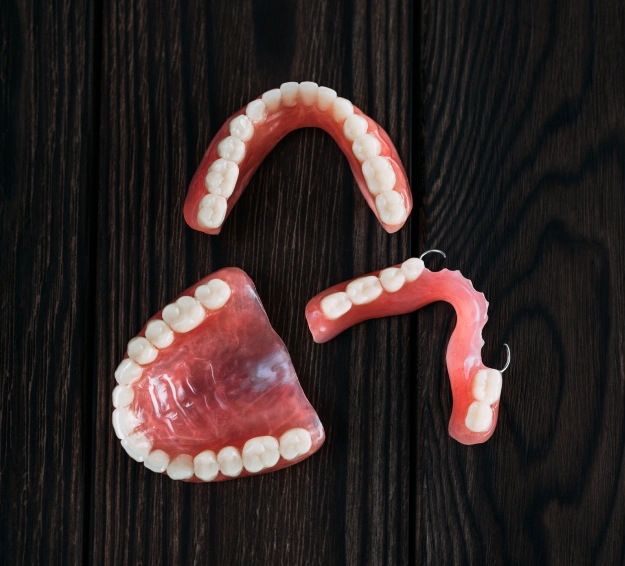
Full dentures are designed for patients who are missing all of their natural teeth in either the upper arch, lower arch, or both. Custom-crafted to fit the unique shape of your gums and jaw, full dentures rest securely in place and are built to closely resemble the size, shape, and color of natural teeth. Beyond restoring your smile’s appearance, full dentures also help support your facial structure, preventing the sunken look that can develop when teeth are missing for an extended period of time.
Partial Dentures for Missing Teeth in Specific Areas
Partial dentures are designed for patients who still have some of their natural teeth remaining and only need to replace one or several missing teeth in a specific area. A partial denture typically uses a metal or flexible framework with clasps that attach securely to your remaining natural teeth, filling the gap left by missing teeth while keeping the rest of your smile intact. In addition to restoring appearance and function, partial dentures also help prevent your remaining teeth from gradually shifting into the empty space, which can affect your bite over time.
Getting Fitted for Your Dentures
Creating a well-fitting denture takes a series of carefully planned steps, since even small inaccuracies can affect comfort and function once the denture is complete.
Consultation and Exam
We evaluate your mouth, discuss your goals, and determine whether full or partial dentures are the right solution for your situation.
Impressions and Measurements
Detailed impressions of your gums and any remaining teeth are taken, along with measurements of how your jaws align and come together.
Wax Try—in
A wax model of your denture is fitted in your mouth so we can confirm the fit, bite, and appearance before the final version is fabricated.
Fabrication
Once the design is approved, your custom denture is crafted using durable, natural-looking materials matched to your preferences.
Final Fitting
Your completed denture is fitted and checked closely for comfort, stability, and a natural bite.
Follow-up Adjustments
As your mouth adjusts to wearing a denture, we schedule follow-up visits to make any small adjustments needed for a comfortable, secure fit.
Who May Benefit from Dentures
Dentures can be a good solution for a range of patients dealing with missing teeth, including those who:
- Are missing all or most of their natural teeth in one or both arches
- Have remaining teeth but need to replace one or several missing teeth
- Are currently wearing older dentures that no longer fit comfortably or securely
- Experience difficulty chewing certain foods due to missing teeth
- Are looking for a non-surgical alternative to dental implants
A consultation can help determine whether full dentures, partial dentures, or another restorative option would work best for your specific situation.
Caring for Your Dentures
Proper care helps your dentures stay comfortable, hygienic, and in good condition for as long as possible. A consistent routine makes a meaningful difference:
- Remove and rinse your dentures after eating to clear away food particles
- Brush your dentures daily with a denture-specific cleaner, avoiding regular toothpaste, which can be too abrasive
- Soak dentures overnight in a denture-cleaning solution to keep them moist and free of buildup
- Handle your dentures carefully over a folded towel or filled sink to avoid damage if dropped
- Continue attending routine dental checkups so your gums and any remaining teeth can be monitored
Restore Your Smile with Confidence
Missing teeth do not have to keep you from eating, speaking, and smiling with confidence. Schedule a denture consultation with Smart Dental Care in Prairieville to explore your options.
Request AppointmentFrequently Asked Questions About Full & Partial Dentures
Most patients need a few weeks to adjust to speaking and eating comfortably with new dentures. Some minor soreness during this adjustment period is normal and typically improves with time.
Dentures generally need to be replaced or relined every five to eight years, since the shape of your gums and jaw can change gradually over time, affecting fit.
It is generally recommended to remove dentures at night to give your gums a chance to rest and to reduce the risk of irritation or bacterial buildup.
Many patients notice some changes at first, but with practice, speaking and eating typically feel natural again within a few weeks of consistent wear.
Full dentures replace all teeth in an arch, while partial dentures replace only the missing teeth in a specific area, attaching to your remaining natural teeth for support.
Both have their advantages, and the right choice depends on your oral health, budget, and personal preferences. We can discuss whether dentures or implants make more sense during your consultation.
Dentures should be brushed daily with a denture-specific cleaner and soaked overnight in a cleaning solution, rather than being cleaned with regular toothpaste, which can be abrasive.
Many dental insurance plans provide at least partial coverage for dentures, since they are considered a functional, restorative treatment. Our team can help verify your specific benefits.